The Design Sprint is a powerful tool for compressed problem-solving. Over a few days, a cross-functional team moves from a vague challenge to a tested prototype. There is a tangible sense of progress, and the high energy of the workshop often leaves stakeholders feeling aligned and ready to build. However, many organisations struggle with the transition that occurs on the Monday morning after the sprint ends.
Without a clear transition plan, the momentum generated in the workshop quickly evaporates. The prototype is often viewed as a static design artefact rather than a functional roadmap, and the insights gained are lost as the team returns to their day-to-day business. This post-sprint slump is where most innovation initiatives fail. Moving from a prototype to a production-ready backlog requires a specific kind of operational finesse that bridges the gap between a creative workshop and a technical sprint.
The Prototype is Not a Specification
One of the most common mistakes teams make is assuming that the sprint prototype is a direct blueprint for development. A prototype is designed to test a hypothesis: it is built for speed, not for scale. It is meant to look real enough to elicit an emotional reaction from a user, but it rarely accounts for edge cases, error states, or complex API limitations.
When you hand over a high-fidelity Figma file to an engineering team without further context, you create significant friction. Developers see a finished UI but lack the business logic behind the interactions. To bridge this gap, the product lead must translate the findings into a functional requirements document. This involves stripping the prototype down to its most valuable components. You are not building the prototype itself: you are building the solution that the prototype proved was necessary.
The Synthesis: Categorising Sprint Outcomes
A Design Sprint should never exist in a vacuum. If the outcome of your sprint is merely a new project, you have likely just added to your team’s cognitive load without a plan for execution. Instead, the results should be integrated into your existing product roadmap using a clear prioritisation framework. We recommend a post-sprint synthesis session held within 48 hours of the final user tests. During this meeting, the core team reviews the user testing recordings and categorises every feature into three specific buckets:
- Non-Negotiables: Features critical to the user reaching the “Aha!” moment.
- Refinements: Elements that worked but showed signs of UX friction or require further design finesse.
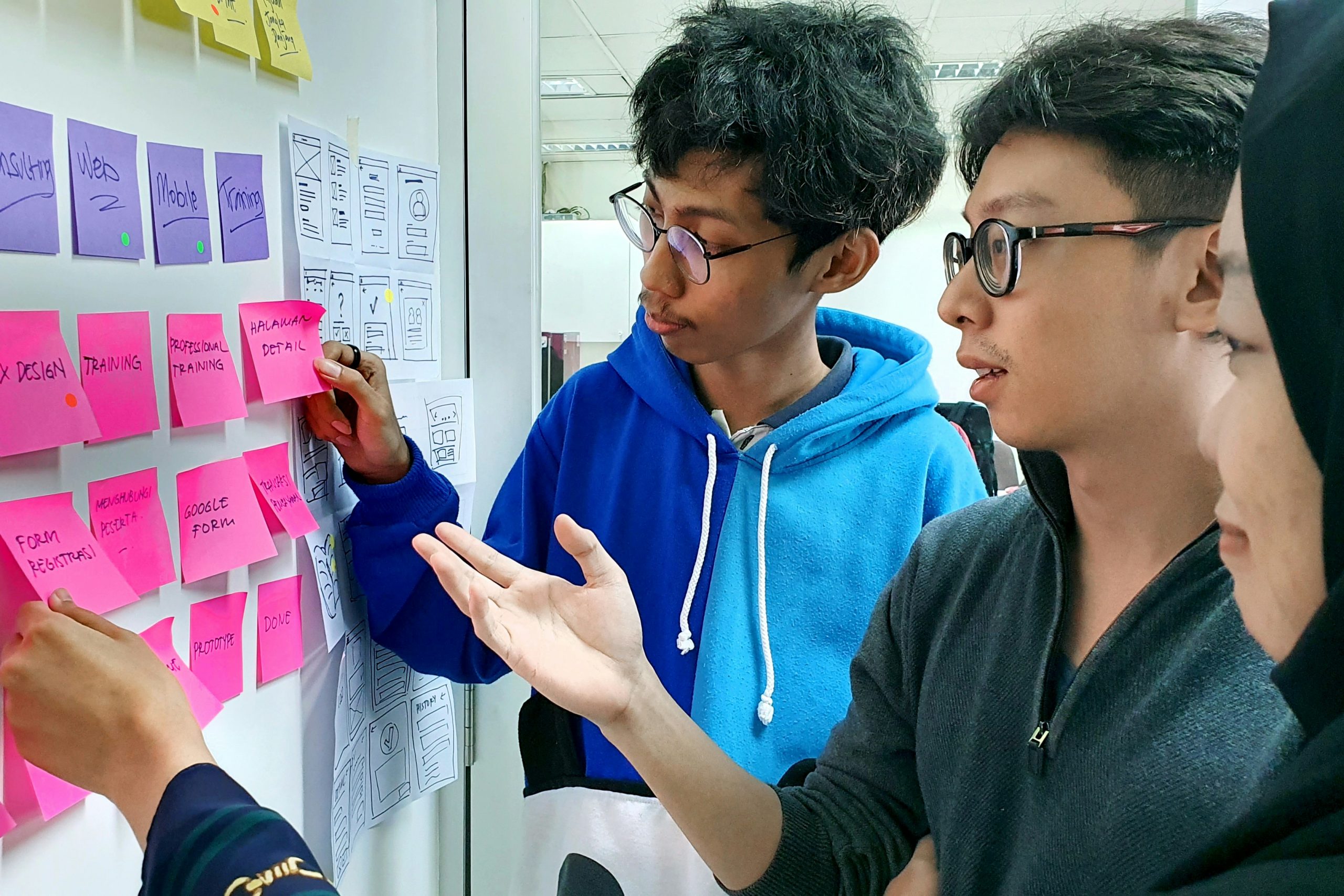
- Distractions: Ideas that looked good on a sticky note but failed to resonate with users or proved too technically expensive.
By mapping these outcomes directly to your Now, Next, Later roadmap, you ensure the sprint’s value is captured immediately. This transforms a one-off workshop into a continuous part of your product strategy.
Maintaining Stakeholder Alignment During the Build
During a sprint, stakeholders are deeply involved. Once the technical work of development begins, that visibility often disappears. When stakeholders lose sight of the progress, they may begin to revert to original assumptions or request features already disproven during user testing.
To prevent this, maintain a Sprint Artefact Hub. This is a single source of truth that houses the original challenge, the user test recordings, and the resulting development plan. Referring back to the evidence from the sprint is the most effective way to keep stakeholders aligned. It shifts the conversation from subjective opinions to the data gathered from real users.
The Technical De-Risking Phase: The Spike Week
While the Design Sprint focuses heavily on user desirability, the week following the sprint must focus on technical feasibility. High desirability is useless if the solution is technically impossible to maintain. Before a single ticket is moved to In Progress, the engineering lead should perform a technical audit of the validated prototype to identify the riskiest technical assumptions.
By spending three to five days on Spikes, which are technical explorations or small proofs of concept, you prevent the team from hitting a wall mid-build. This ensures that your sprint leads to a successful launch rather than a folder of unused designs. If a technical hurdle is insurmountable, you pivot the design now, rather than after spending months of engineering time.
Defining the MVP vs. the Sprint Prototype
It is rare that an entire sprint prototype becomes the Minimum Viable Product. Usually, the prototype is still too heavy for a first release. The transition to development is the best time to apply a “Build Less” philosophy. Look at the prototype through the lens of the non-negotiables identified during synthesis. What is the absolute smallest version of this solution that still delivers the value we saw in the user tests?
A successful transition means the development team is focused on a lean, validated backlog. This increases velocity and allows the organization to get the product into the hands of real users faster. The real learning begins once the code is live: the sprint was just the preparation.
Sustaining Momentum Through Execution
A Design Sprint is only as successful as the product it produces. The workshop itself is a means to an end, not the end itself. Moving from a workshop environment to real development requires a disciplined transition. It involves translating high-level prototypes into technical logic, integrating findings into a living roadmap, and maintaining the intellectual honesty discovered during user testing. When you treat the week after the sprint with the same rigour as the sprint itself, you transform a creative exercise into a predictable engine for growth.
If your team is looking for effective Design Sprint advice or simply wanting to view our catalogue of Design Sprint artefacts, don’t hesitate to email hello@relab.com.au or schedule a call with our Principal, Alvin Hermanto here.